Category | Quality Management
Last Updated On 19/05/2026
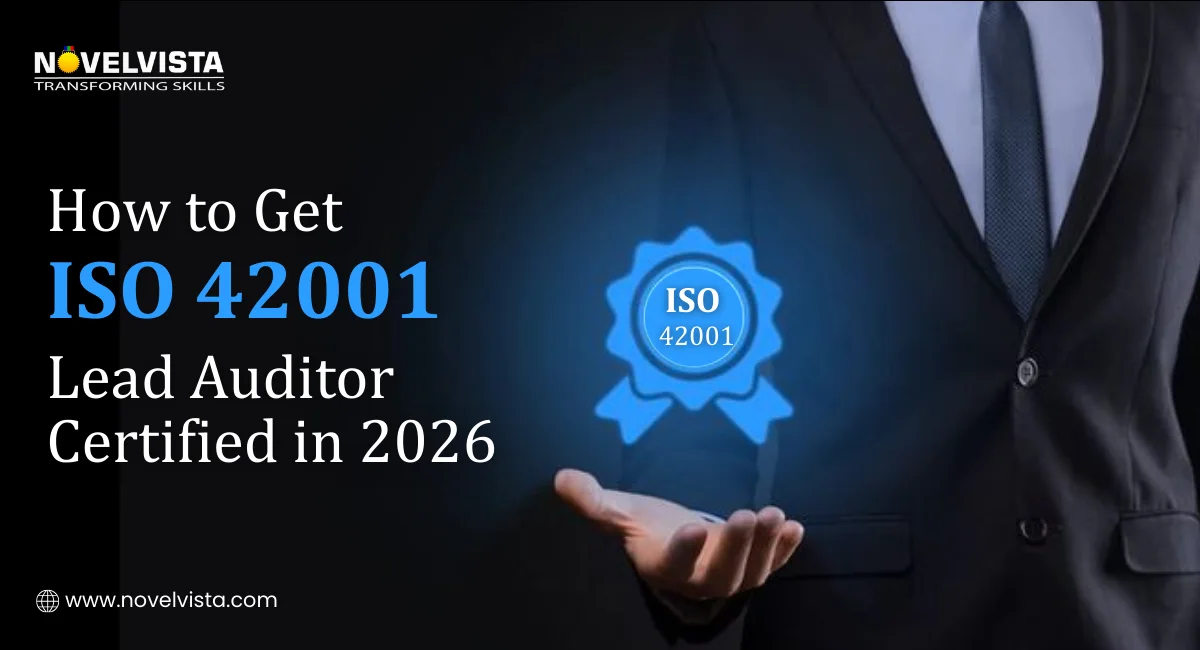
AI governance is becoming a serious compliance requirement across industries. Organizations are deploying AI systems rapidly, regulators are paying closer attention, and the demand for qualified auditors who can verify responsible AI practices is growing fast.
If you want to know how to get ISO 42001 certified as a Lead Auditor, this guide covers the complete pathway, from eligibility and training to the exam, application, and maintaining your credential in 2026.
| Topic | Key Point |
| What is ISO 42001 | International standard for AI Management Systems covering governance, ethics, and risk |
| Who this is for | Compliance professionals, auditors, risk managers, and AI governance specialists |
| Training format | 5-day, 40-hour program covering all ISO 42001 clauses and Annex A controls |
| Exam domains | AIMS concepts, ISO 42001 clauses, and audit methodology |
| Prerequisites | Basic AI knowledge, risk management familiarity, and management system experience are helpful |
| Certification body | GSDC and accredited training providers like NovelVista |
| Maintenance | Annual CPD activities and participation in real-world audits |
| Career benefit | Growing demand as AI regulations expand globally across industries |
Before jumping into the certification steps, it helps to understand what ISO 42001 actually covers and what a Lead Auditor is expected to do.
ISO 42001 is the international standard for AI Management Systems, commonly referred to as AIMS. It gives organizations a structured framework for governing AI responsibly. The standard covers four key areas:
A Lead Auditor's job is to evaluate whether an organization's AIMS meets ISO 42001 requirements. That means reviewing documentation, interviewing staff, observing processes, and testing controls across all relevant clauses and Annex A requirements.
In our audit-readiness workshops, over 60% of candidates initially confuse implementation with auditing. Focused role-based training improves audit accuracy within the first two mock assessments.
One of the most common questions people ask when researching this certification is whether they qualify to start.
The good news is that beginner-level candidates can enroll in ISO 42001 training. You do not need to be an AI expert or a seasoned auditor to get started. That said, having some background in the following areas makes the training and exam significantly more manageable:
Professionals coming from information security, compliance, auditing, or risk management backgrounds will find a lot of familiar territory in this certification. If you are new to these areas, the training program covers the foundational concepts you need.
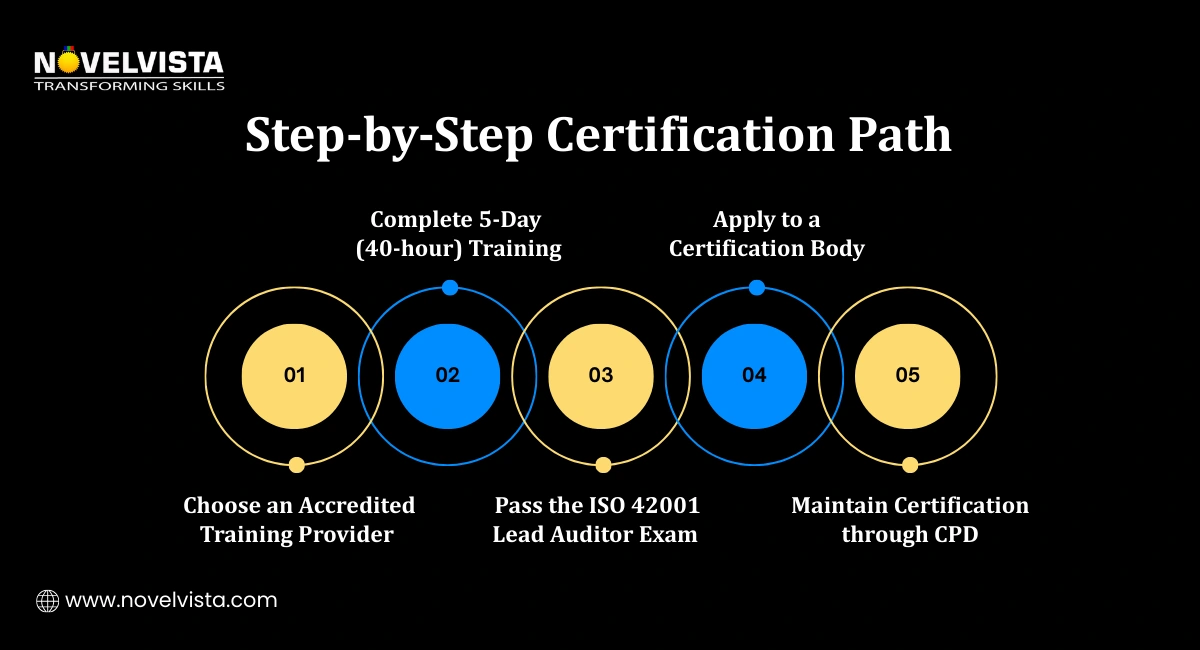
The first practical step in how to get ISO 42001 certified as a Lead Auditor is selecting the right training program. Not all training providers are equal, and choosing an accredited program matters for both the quality of your learning and the recognition of your credential.
Most ISO 42001 training programs follow a similar structure:
A well-structured program will include the following modules:
Check out the latest ISO 42001 Syllabus for 2026 here
Look for providers that offer updated 2026 course content, recognized accreditation, and practical audit exercises built into the program. NovelVista is one provider offering ISO 42001 training with current content aligned to 2026 regulatory developments.
Across our training programs, accredited courses with audit simulations show 2x higher exam pass rates compared to theory-only formats without practical exercises.
Completing the training is only part of Step 2. You also need to pass the certification exam before moving to the application stage.
The training builds your ability to work as a practicing auditor, not just someone who has read the standard. Key learning outcomes include:
The certification exam typically assesses three domains:
| Exam Domain | What It Tests |
| AI Management System concepts | Understanding of AIMS structure, purpose, and ISO 42001 scope |
| ISO 42001 clauses and control | Knowledge of specific clause requirements and Annex A controls |
| Audit principles and methodology | Ability to plan, conduct, and report on AIMS audits |
To prepare effectively for the certification, explore our list of ISO 42001 Exam Questions and understand the types of questions you can expect.
Candidates can choose the format that suits their schedule and learning style:
Both formats cover the same core content. The right choice depends on how you learn best and how quickly you want to complete the program.
This Guide to ISO 42001 Certification is designed to give you a realistic picture of what each step involves so you can prepare properly rather than being surprised by requirements along the way.
Passing the exam is a significant milestone. The next step is submitting your formal application to a recognized certification body to receive your credential.
After completing your training and passing the exam, you submit an application to a recognized certification body. GSDC is one of the primary bodies that issues ISO 42001 credentials.
The application typically requires:
Some certification programs require candidates to demonstrate a minimum number of audit experience hours to qualify for full Lead Auditor credentials. If you are new to auditing, here is how to build that experience:
Application rejections in our candidate pool are typically linked to incomplete audit evidence documentation, highlighting the need for properly maintained audit logs and experience records.
One pathway worth knowing about is the stackable credential model. Some professionals start by completing a Lead Implementer certification first. This gives them deep knowledge of how an AIMS is built and deployed. They then progress to the Lead Auditor certification, bringing implementation experience into their auditing work.
This combined background makes for particularly strong auditors because they understand both how the system should be designed and what good implementation evidence looks like in practice.
Getting certified is the first step. Keeping your certification current is an ongoing responsibility that ensures your knowledge stays relevant as AI governance standards and regulations continue to evolve.
Most ISO 42001 certifications require the following on an ongoing basis:
Beyond the maintenance requirements, certified Lead Auditors are expected to actively perform their role in the field. This includes:
Staying current matters particularly in AI governance because the regulatory landscape is changing quickly. New AI regulations are being introduced across major markets, and Lead Auditors need to understand how those developments affect the standards they audit against.
Plan your ISO 42001 certification budget, track costs, identify savings, and follow
a structured checklist to prepare, implement, and successfully achieve certification.
The demand for qualified AI governance auditors is growing significantly. Organizations across every industry are implementing AI systems, and regulators are increasingly requiring evidence that those systems are governed responsibly.
Here is what this certification opens up for professionals who complete it.
ISO 42001 have a skill set that very few professionals currently hold. The standard is relatively new, the pool of certified auditors is still small, and the demand from organizations seeking certification is rising steadily.
That combination creates genuine career leverage for professionals who move early.
Certified Lead Auditors are well-positioned for roles including:
As AI regulations expand globally, the requirement for independent verification of AI governance practices will grow alongside them. Governments, financial regulators, healthcare authorities, and technology oversight bodies are all moving toward mandatory AI governance requirements.
Certified Lead Auditors will be the professionals organizations turn to when they need independent verification that their AI systems meet those requirements. That demand is structural and long-term rather than a short-term trend.
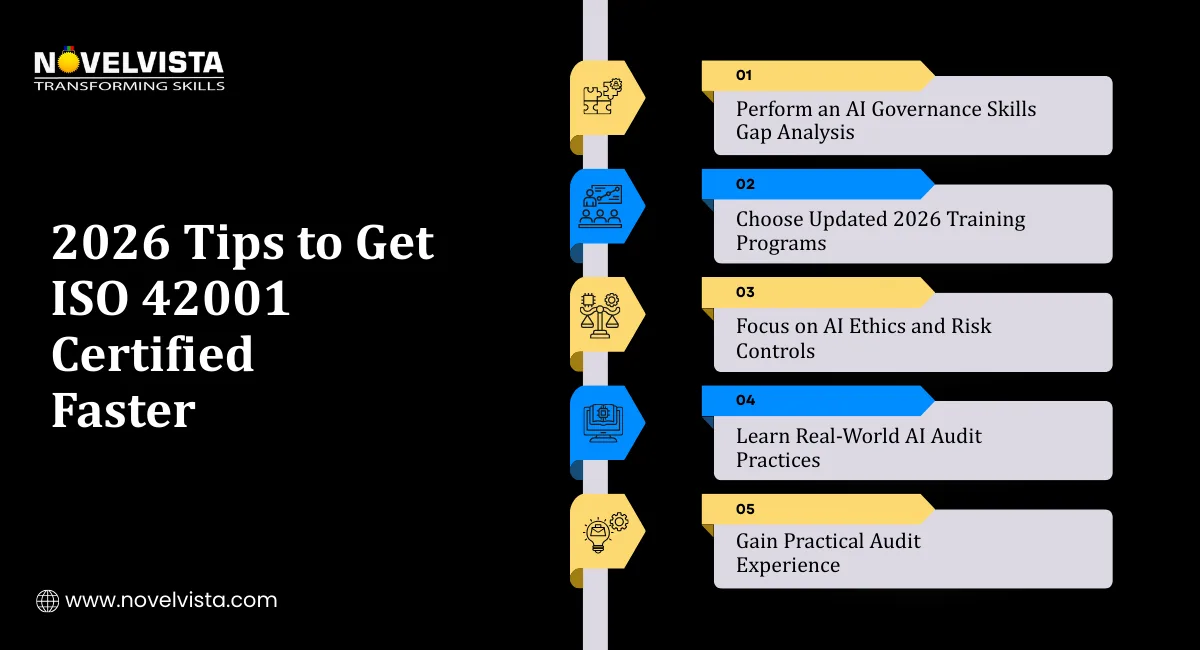
The certification process is straightforward when you approach it with the right preparation. Here are practical tips to move through the pathway efficiently in 2026.
Before enrolling in training, honestly assess where your current knowledge stands against the key competency areas:
Knowing your gaps upfront lets you focus your study time on the areas that need the most attention rather than reviewing content you already know well.
AI governance is an evolving area. Training content that was accurate in 2023 may not reflect current regulatory developments or the latest guidance on ISO 42001 implementation.
When evaluating providers, look for:
NovelVista's ISO 42001 program is built with current content and includes practical exercises aligned to how audits are actually conducted in 2026.
Three areas are receiving increasing attention in ISO 42001 audits heading into 2026:
Preparing specifically for these topics improves your readiness for both the exam and real-world audit work.
The exam tests practical auditing knowledge, not just theoretical understanding of the standard. The best preparation combines reading the clauses with working through realistic audit scenarios.
Look for training programs that include:
Candidates who perform a structured skills gap analysis before training reduce overall preparation time by 15–20% and show better retention during final assessments.
The path to ISO 42001 certification follows a clear sequence. Choose an accredited training provider, complete the 40-hour program, pass the exam, submit your application, and maintain your credential through ongoing professional development.
This Guide to ISO 42001 Certification has covered every step of that journey, from understanding the standard and meeting prerequisites through to career positioning and practical 2026 preparation tips.
How to get ISO 42001 certified as a Lead Auditor is a straightforward question with a structured answer. The organizations implementing AI systems today need qualified auditors to verify their governance frameworks. The professionals who build that expertise now will be well-positioned as that demand continues to grow.
AI governance auditing is not a niche specialty for much longer. It is becoming a mainstream compliance requirement across industries worldwide, and this certification puts you at the forefront of that shift.
NovelVista's ISO 42001 certification training gives you the practical knowledge and structured guidance to move through the full certification pathway with confidence. The course covers every clause, all 38 Annex A controls, and real-world audit techniques aligned to 2026 requirements. It is built for professionals who want recognized expertise in AI governance auditing.
Explore NovelVista's ISO 42001 and take the first step toward your AI governance career.
Author Details

Confused About Certification?
Get Free Consultation Call
Stay ahead of the curve by tapping into the latest emerging trends and transforming your subscription into a powerful resource. Maximize every feature, unlock exclusive benefits, and ensure you're always one step ahead in your journey to success.